Kinesiology: Listening to What Your Body Already Knows
Kinesiology is where my own journey into holistic therapy began, and it remains the foundation for almost everything else I offer. At its heart, it's a way of listening — using gentle muscle testing as a form of biofeedback to help build a clear picture of what's going on for you, physically, nutritionally, emotionally, and energetically.
Every session starts with time to talk — a full look at your medical history, what's brought you in, and what you're hoping to get from our time together. Muscle testing isn't about strength, and it isn't a diagnostic test in the medical sense. It's a way of tuning in to what your body is communicating, moment to moment.
Because everybody responds differently on any given day, no two sessions look quite the same — even for the same client. What comes up for you today may be completely different next time, and the session follows that lead.
Kinesiology was the first modality I trained in, and it's often the starting point for clients too — including those who go on to combine it with Angelic Reiki, Master Energy Colour Healing, or Crystal Healing. It's also where my work supporting children and young people with retained primitive reflexes sits, helping to address patterns that may be affecting movement, learning, or emotional regulation.
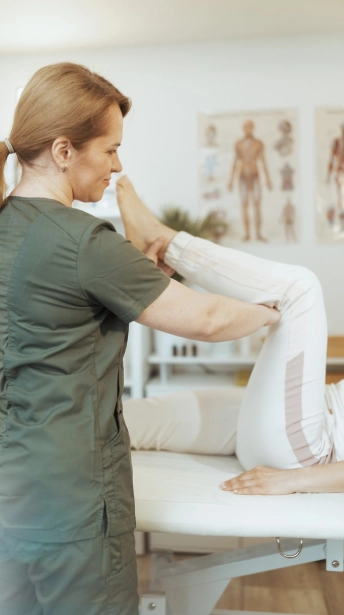
What Happens in a Session
A typical session may include:
- Gentle muscle testing — a way of listening to how your body responds, not a test of strength
- Structural, nutritional, emotional, or energetic work — whichever combination your body seems to be asking for that day
- A plan built together — practical next steps, tailored to you, not a fixed protocol
How Kinesiology May Help
Many clients find that kinesiology supports a sense of balance, calm, and clarity. Sessions may help with:
- Stress and everyday overwhelm
- Anxiety and low mood
- Fatigue and low energy
- Digestive discomfort
- Energy blockages and low vitality
- Hormonal and nutritional imbalances
- Sports injuries and physical tension
- Emotional wellbeing
- Neurodiversity-related support
- Retained primitive reflexes in children
What to Expect
When you come for a session, here's how it typically unfolds:
- A short chat beforehand about how you're feeling and what's brought you in
- Time lying fully clothed on the treatment couch while gentle muscle testing takes place
- A calm, unhurried space, with everything explained as we go
- A clear plan by the end — built together, and yours to take at whatever pace feels right
Sessions can also be offered remotely. Distance healing carries the same benefits as an in-person treatment — energy work isn't limited by geography — so you can experience the full effects of your session from the comfort of your own home, via phone or video call.
Frequently Asked Questions
If you can't find your question here, please don't hesitate to get in touch-
Kinesiology sessions are tailored to you, and can stand alone or be combined with another modality. You can find full session lengths and pricing here.
-
Very little. I'd just suggest wearing comfortable clothing, staying hydrated, and avoiding a heavy meal shortly before your appointment — beyond that, just come with an open mind.
-
Not at all. Kinesiology is gentle and non-invasive. You remain fully clothed throughout, and most clients find sessions relaxing rather than strenuous.
-
Yes. Kinesiology can be gentle and adaptable enough for children, including support for retained primitive reflexes. If you're considering a session for your child, do get in touch beforehand so we can talk through what to expect.
-
Muscle testing is a gentle way of communicating with the body, used as a form of biofeedback. Rather than testing physical strength, it involves noticing subtle changes in muscle response, which can help identify areas that may benefit from support. It's simple, non-invasive, and doesn't require any particular fitness or flexibility.
-
Muscle testing can be a helpful part of the conversation around diet, lifestyle, and general wellbeing, including exploring which supplements might suit you. This isn't a medical or nutritional prescription, so please continue to check with your GP, pharmacist, or a qualified nutritionist before starting any new supplement, particularly if you take medication or have an existing health condition.
Kinesiology is a complementary therapy intended to support general wellbeing and relaxation. It is not a substitute for medical diagnosis, advice, or treatment. Please continue to see your GP or healthcare provider for any medical concerns.
Location Details
-

- 0 mins - Tilehurst
- 10 mins - Reading
- 10 mins - Pangbourne
- 15 mins - Goring
- 15 mins - Caversham
- 30 mins - Wokingham
-
Accredited: